
Itawamba County Court Records After a Jail Arrest
Court records after a jail arrest in Itawamba County usually begin with a custody event at the Itawamba County Jail / Itawamba County Detention Center, then continue through the court that has authority over the charge. The jail roster is the first public signal for many arrests because it can show booking date, arresting agency, charge wording, bond amount, and whether a hold or detainer is listed. The court record is the next layer. It is where a complaint, information, indictment, plea, order, dismissal, or judgment is entered and tracked.
That distinction matters because the charge shown at booking is not always the final charge filed in court. Justice Court handles misdemeanor criminal cases, preliminary hearings, bond setting, search warrants, and arrest warrants. Criminal Court is listed locally as the second and fourth Tuesday of each month. Felony cases move toward the Itawamba County Circuit Clerk and the First Circuit Court District, with prosecution by the First Circuit District Attorney. For the custody side, use jail inmate records. For booking photos and recent roster images, use jail mugshots. The court file should be read as the record of prosecution, not as a full copy of the jail intake file.
How to Find Itawamba County Court Records After an Arrest
The best search path depends on the stage of the case. A new booking may appear on the Tiger jail roster before the court docket shows much detail. A misdemeanor, preliminary hearing, bond issue, or warrant matter may stay close to Itawamba County Justice Court. A felony case is more likely to involve the Circuit Clerk, Mississippi Electronic Courts, and the First Circuit District Attorney. The Circuit Clerk is the keeper of the general court docket, where parties, pleas, indictments, lower-court appeal records, and papers are entered and referenced to the minute book.
- Start with the jail roster details, especially booking date, arresting agency, charge wording, and bond field.
- Identify the likely court: Justice Court for misdemeanor, preliminary, bond, and warrant matters; Circuit Court for felony criminal records; municipal court if a city case is involved.
- Search Mississippi Electronic Courts if the case is available electronically and an MEC account is available.
- Contact the Itawamba County Circuit Clerk at 201 West Main Street, Fulton, MS 38843, phone (662) 862-3511, for circuit criminal docket entries.
- Compare each court charge to the original booking charge before treating it as the filed criminal case.
The official Itawamba County Justice Court page identifies the court functions that often sit closest to the arrest date.
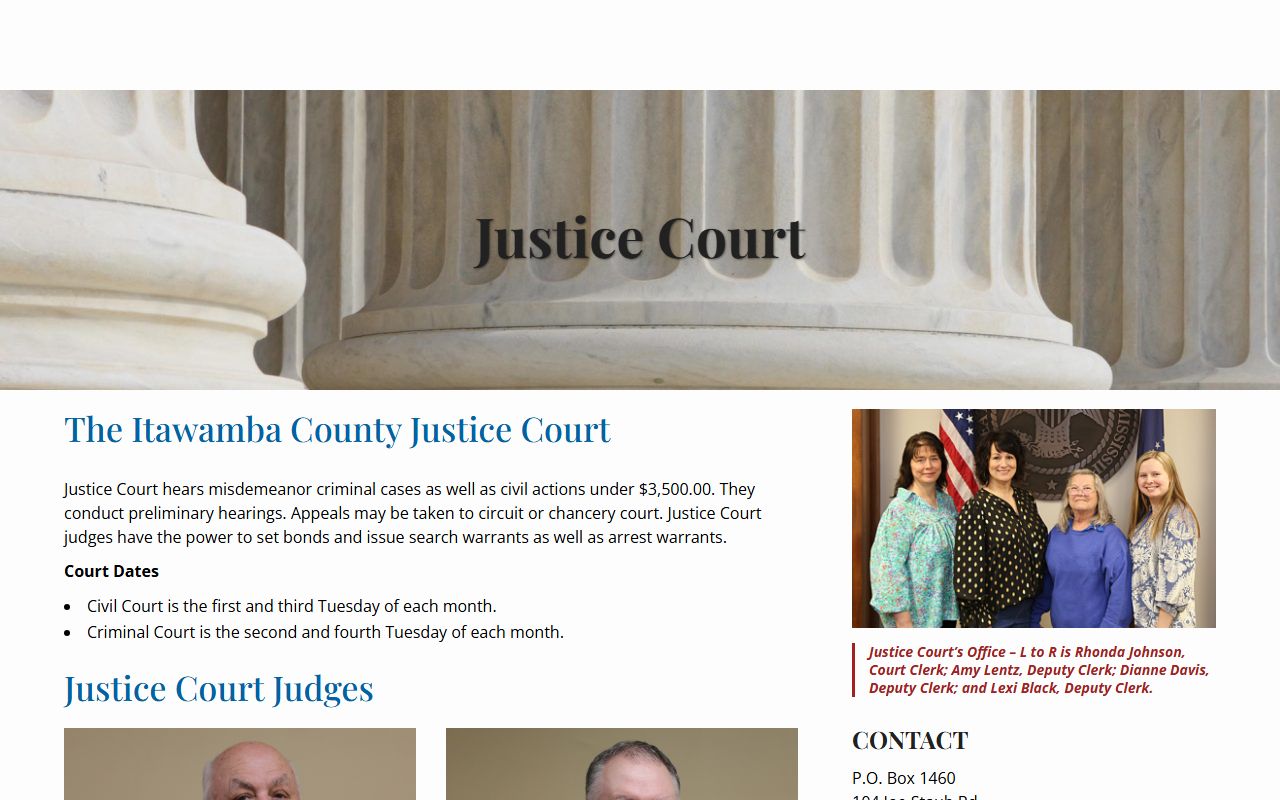
Those Justice Court functions are especially important when the arrest involves a misdemeanor, an initial bond question, or a warrant that caused the booking.
MEC and Clerk Search Fields for Court Records After Arrest
Mississippi Electronic Courts is the statewide electronic filing and case-management system. MEC is not the same thing as the jail roster, and access can require registration or login through the MEC account workflow. If an older case, non-electronic filing, sealed matter, or courthouse-only document is not available through the portal, the clerk's office remains the practical fallback for circuit criminal records.
| Field or Access Point | Type | Required | Notes |
|---|---|---|---|
| MEC login/account | Registration or login | Yes for electronic access | MEC access uses an account workflow; courthouse public access may differ. |
| Case number | Search input | No, but useful | Use the number from court papers, notices, or clerk correspondence when known. |
| Defendant or party name | Search input | Usually enough to begin | Use the full legal name and confirm with date of birth or case details where available. |
| Court or county | Filter or dropdown | Often needed | Select Itawamba County or the First Circuit court context where the portal provides that option. |
The Mississippi Electronic Courts portal is the official statewide entry point for electronic court access and helpdesk information.
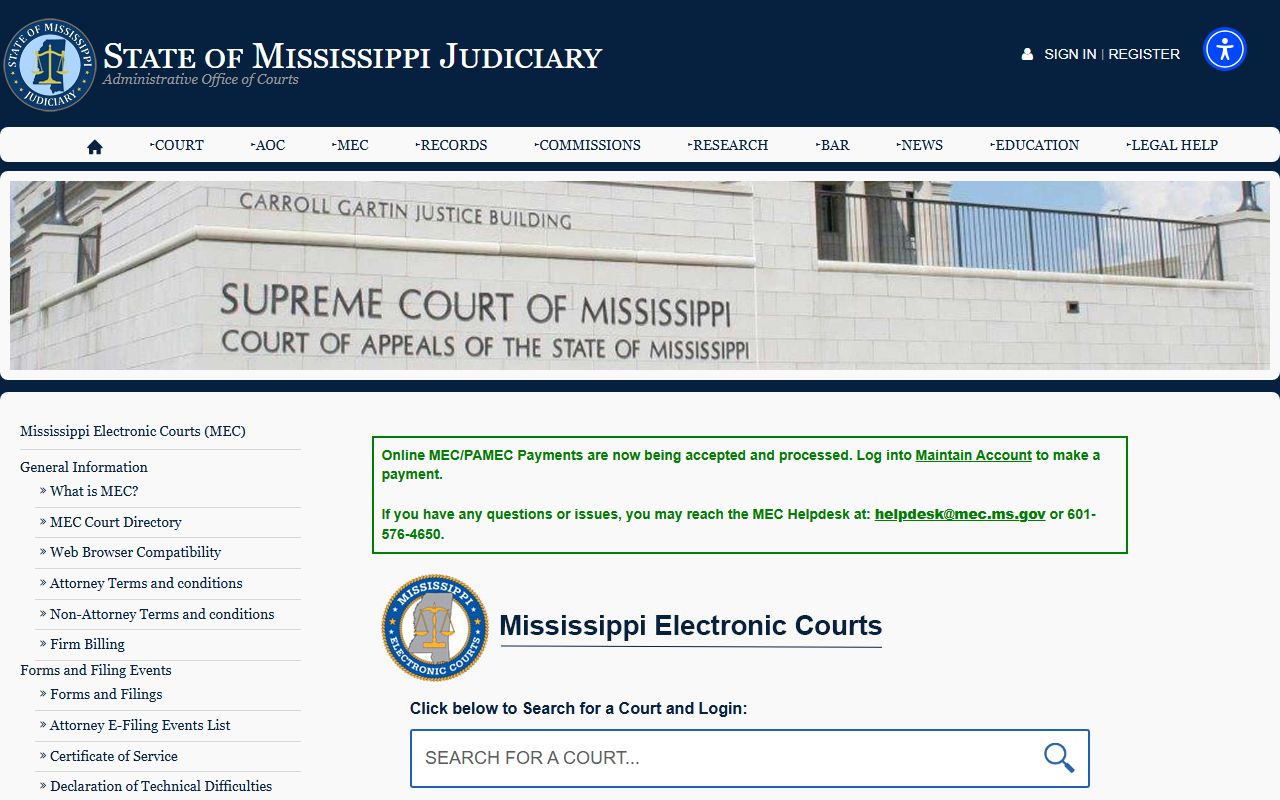
Use MEC for the electronic case side, then use the Circuit Clerk when the record is not visible, needs certification, or requires local docket confirmation.
How Charges Get Filed After an Arrest: Complaint, Information, and Indictment
The arrest creates custody records, but the filed charge creates the court record. In a misdemeanor case, the starting document may be a complaint handled in Justice Court. In felony practice, a prosecutor may proceed through an information where allowed or through a grand jury indictment. The First Circuit District Attorney, Jason D. Herring, serves Itawamba County along with Alcorn, Lee, Monroe, Pontotoc, Prentiss, and Tishomingo counties. His office is part of the prosecution path for felony charges after the arrest moves beyond jail intake and preliminary court activity.
| Complaint | Information | Indictment | |
|---|---|---|---|
| Filed By | Officer or prosecutor, depending on the matter | Prosecutor | Grand jury after presentation by the prosecutor |
| Common For | Misdemeanors, warrant cases, and early-stage proceedings | Some felony prosecutions where legally available | Felony cases that require grand jury action |
| Starts | A Justice Court or lower-court criminal case | A formal circuit-level prosecution | A circuit criminal case based on grand jury charges |
| Why It Differs From Booking | May restate or narrow the arrest charge | May reflect prosecutor review after arrest | May add, drop, or change counts from the original booking entry |
Charge Status and What It Means
Charge status can change more than once after an arrest. The roster may show the charge used at intake, while the court file may show a different filed count, a reduced count, a dismissal, or a later indictment. A bond amount on the roster is also not a guarantee of release because a separate hold, detainer, or no-bond order can control custody. Read every charge line separately and look for the current status rather than assuming that a booking entry is the final result.
| Status | What It Means |
|---|---|
| Pending | The charge remains open and has not reached dismissal, plea, trial verdict, or final judgment. |
| Amended / Reduced | The original allegation was changed by prosecutor action, plea negotiation, court order, or later filing. |
| Dismissed | The charge was ended by court action, but the arrest and filing history may still require expungement to limit public access. |
| Nolle Prosequi | The prosecutor declined to continue that charge, usually reflected by a docket entry rather than a conviction. |
| Indicted | A grand jury returned a formal charge that may replace or refine the booking charge. |
Bond and Release After an Arrest
Bond information in Itawamba County comes from both the court and jail sides. The Justice Court page states that judges have authority to set bonds, and the Tiger roster can display bond amount by charge. A $0.00 bond entry does not always mean free release. It may mean a hold, detainer, no-bond matter, or another agency's custody issue. Before posting money, call Itawamba Jail at (662) 862-7300 to confirm the current total, any holds, accepted payment methods, posting hours, and whether a bonding company must deliver paperwork.
| Bond Type | How It Works |
|---|---|
| Cash Bond | Money is posted directly according to court or jail instructions; payment methods should be confirmed with the jail. |
| Surety Bond | A licensed bail agent posts the bond for a fee and handles the required paperwork under Mississippi law. |
| PR / Own Recognizance | The court releases the person on a promise to appear without requiring full cash payment up front. |
| Property Bond | May be available only if ordered or accepted by the court; local online pages did not confirm routine use. |
| No-Bond Hold | Release is blocked by court order, detainer, fugitive hold, or another agency even if a dollar amount appears elsewhere. |
Warrants That Lead to an Arrest
No official Itawamba County online active-warrant list was located in the research. The strongest local source is Justice Court because county information says Justice Court judges can issue search warrants and arrest warrants. If a warrant resulted in booking, the person may appear on the Tiger roster after intake, and the profile may list an arresting agency, charge or hold language, bond amount, and detainer terms. If the warrant is tied to a felony indictment or circuit case, check the Circuit Clerk and MEC records instead of relying on a sheriff website search form that does not exist for Itawamba County.
Common warrant labels mean different things. An arrest warrant authorizes law enforcement to take a person into custody. A bench warrant often follows a missed court date or court-order violation. A search warrant authorizes a search, not a custody status by itself. A fugitive warrant or hold may involve another county or state. For Fulton city matters, the Fulton Police Department is listed at 303 W. Cedar St., Fulton, MS 38843, phone (662) 862-3441, but no separate city warrant lookup was found.
Charges vs. Convictions
An arrest and a charge are accusations. They are not the same as a conviction. Court records after an arrest can show allegations, preliminary hearings, bond orders, continuances, dismissals, pleas, judgments, and sentencing entries. Treat each entry according to its stage. A person can be arrested and released with no conviction, charged and later dismissed, charged and convicted of a different count, or indicted after the original roster language changes.
| Charge | Conviction | |
|---|---|---|
| Stage | Accusation filed or carried in a criminal case | Verdict, guilty plea, or other final adjudication |
| Burden of Proof | Often begins with probable cause or a charging decision | Requires proof beyond a reasonable doubt or a valid plea |
| Public Record | Often public unless sealed, juvenile, expunged, investigative, or otherwise restricted | Often public unless later sealed, expunged, or legally restricted |
| Meaning for Searchers | Do not treat it as proof of guilt | Check sentencing, disposition, appeal, and expungement history |
Sealed vs. Expunged Arrest Records
Mississippi public records law starts from access: public records are available for inspection unless an exemption or other statute limits release. That does not mean every arrest or court record stays visible forever. Juvenile records, sealed files, law-enforcement investigative records, and expunged matters may be withheld. Mississippi's expunction statute is commonly cited as Miss. Code Ann. 99-19-71, but eligibility depends on the charge, result, timing, and current law. A dismissal does not automatically erase every online or courthouse trace without the required court process.
| Sealed | Expunged | |
|---|---|---|
| Visibility | Hidden from ordinary public inspection by court order or rule | Removed or treated as legally cleared under an expunction order |
| Law Enforcement | May retain limited access depending on the order and law | Access is more limited, but exceptions can still exist under Mississippi law |
| Eligibility | Depends on record type, court order, juvenile status, or confidentiality law | Depends on Miss. Code Ann. 99-19-71 and the specific disposition |
| Practical Step | Ask the clerk how the order affects public access | Provide the expungement order to agencies holding arrest or booking records when needed |
Background Check Considerations
Casual court lookups are different from regulated background checks. The Itawamba County Sheriff's Department performs local background checks in person with valid ID, with county-resident and non-county-resident fee rules published on the sheriff page. Court files, jail roster entries, sheriff background checks, and private screening reports can all return different information because they pull from different record systems and are governed by different rules.
Important: This site is not a consumer reporting agency and must not be used for employment, tenant, credit, insurance, or other FCRA-covered decisions.
Restricted Court Records After an Arrest in Itawamba County
Some records should not be expected in a public online search. Juvenile matters, sealed charges, expunged arrests, active investigative materials, and some law-enforcement records may be withheld under Mississippi law or court order. The Mississippi Public Records Act, Miss. Code Ann. 25-61-1 et seq., is the access baseline, but it also works alongside exemptions and other confidentiality rules. Public bodies may also set request procedures and charge actual costs for search, review, and duplication.
The official Itawamba County Circuit Clerk page describes the clerk's docket and criminal-record functions for circuit court matters.
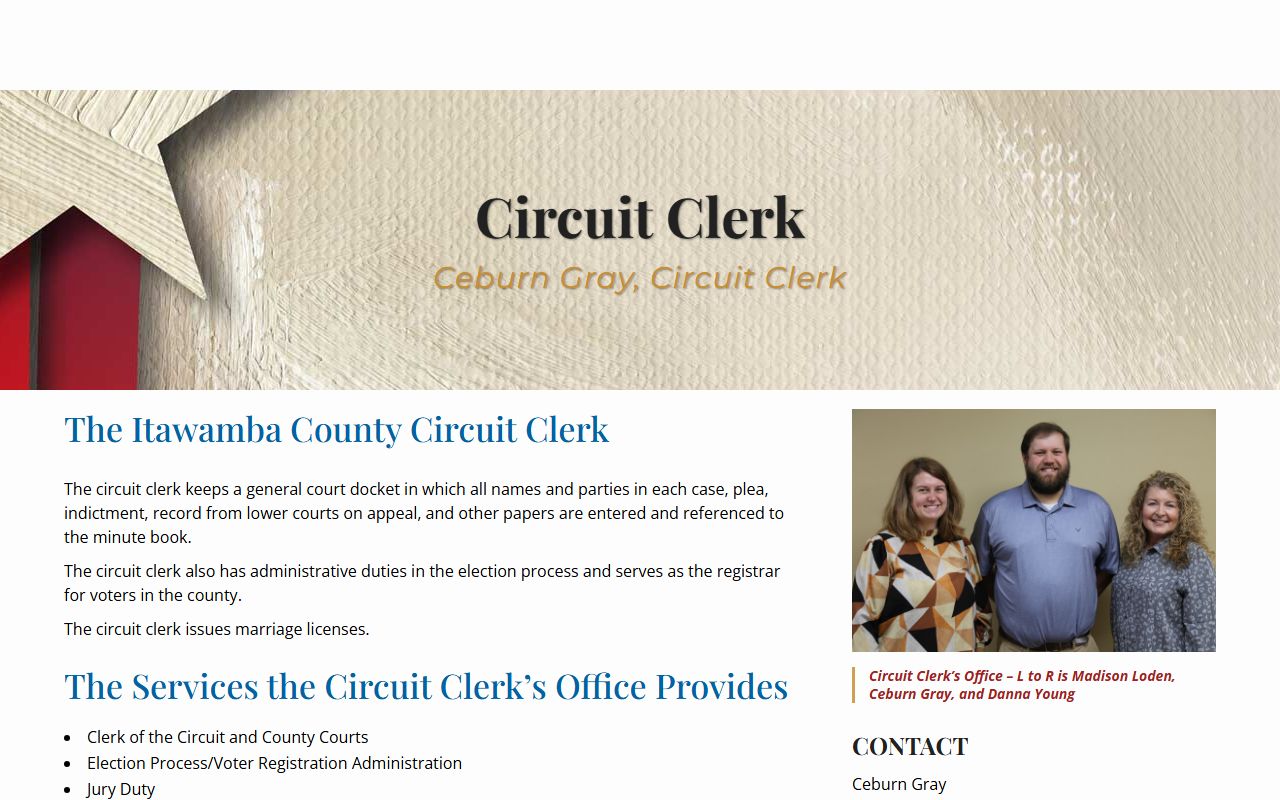
When a case is not visible through MEC or a public search, the Circuit Clerk is the local office to confirm whether the issue is timing, access, sealing, expungement, or a non-electronic record.
First Circuit District Attorney and Filed Charges
For felony charges after a jail arrest, the prosecutor's role is separate from the jail's custody role. Itawamba County is part of the First Circuit Court District, and District Attorney Jason D. Herring serves the district. The official district listing identifies the Tupelo office at 302 Franklin Street, Tupelo, MS 38802, phone (662) 432-2802, and a Corinth office at 706 Cruise Street, Corinth, MS 38834, phone (662) 287-2486. Office hours are Monday through Friday, 8:00 AM to 5:00 PM.
The First Circuit courthouse locations page lists Itawamba County's courthouse and Circuit Clerk contact for the circuit court setting.
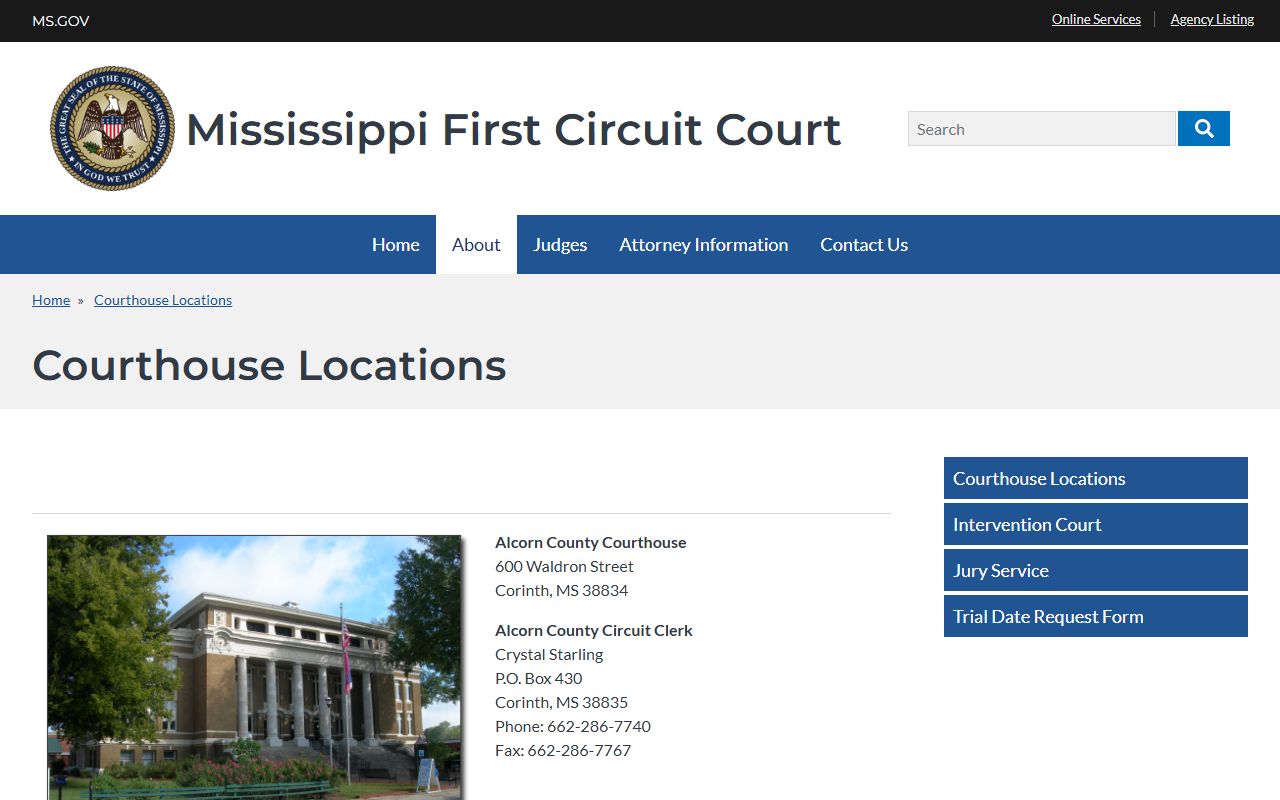
Use the district attorney information to understand who prosecutes felony matters, but use the court docket and clerk records to verify what was actually filed and how the case ended.